From Armbands to Snapchat: Tracing the Uneven Border of Student Speech in America
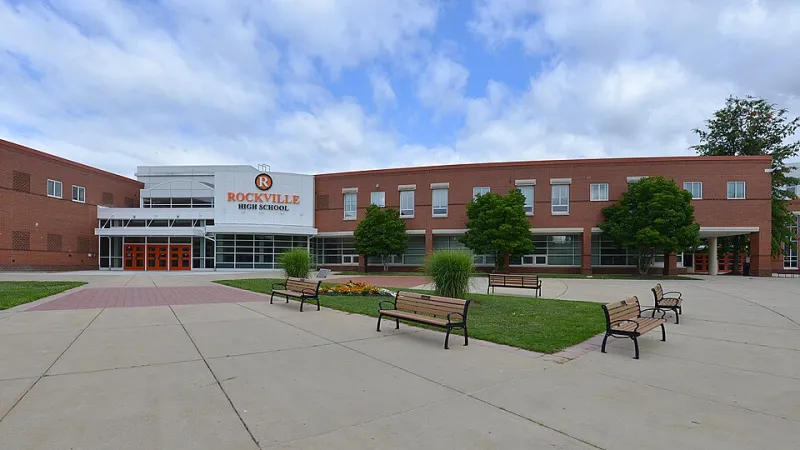
Photo: G. Edward Johnson, CC BY 4.0, via Wikimedia Commons
When Mary Beth Tinker wore a black armband to her Des Moines classroom in 1965, she could not have imagined that the gesture would become the anchor point for every argument over student expression that followed. Nor could the justices who decided Tinker v. Des Moines have anticipated a world in which a seventh grader's Snapchat post, composed in her bedroom on a Saturday night, could trigger a disciplinary hearing on Monday morning.
The arc from armbands to smartphones is not a story of steady expansion. It is a story of an uneven, sometimes contradictory border — one that students, parents, and district attorneys continue to negotiate case by case.
The High-Water Mark of Tinker
Tinker established a principle that still sounds radical when spoken aloud: students do not "shed their constitutional rights to freedom of speech or expression at the schoolhouse gate." Speech on campus, the Court held, could only be restricted if it materially and substantially disrupted the educational environment.
That standard, however, has been carved away at the edges for decades. Bethel v. Fraser (1986) permitted discipline for a lewd student election speech. Hazelwood v. Kuhlmeier (1988) gave schools broad control over school-sponsored publications — the ruling most often invoked in yearbook and newspaper disputes. And Morse v. Frederick (2007), the so-called "Bong Hits 4 Jesus" case, carved out an exception for speech at school events that could be read as promoting illegal drug use.
Each decision narrowed the map. What remained of Tinker was a core protection for individual, non-disruptive, non-school-sponsored expression — precisely the kind of speech most students actually produce.
Mahanoy and the Off-Campus Question
In 2021, the Supreme Court confronted the modern reality directly in Mahanoy Area School District v. B.L. A Pennsylvania high schooler, frustrated after landing on junior varsity cheerleading, posted a profanity-laced message about her school and its cheer program on Snapchat. The image disappeared, as Snapchat images do — but a screenshot outlived it, and so did her suspension from the squad.
The Court ruled 8–1 that the school had overreached. Justice Stephen Breyer's majority opinion acknowledged what educators had long known anecdotally: in the age of the smartphone, "off-campus speech" is a category that barely holds together. Students are always a notification away from school, but they are not always at school.
The ruling offered guiding principles rather than a bright line. Off-campus speech deserves heightened protection; schools retain a special interest in bullying, threats, and targeting of peers and staff; and schools remain vulnerable to a student's worst moment. Justice Clarence Thomas, dissenting, argued that the framework abandoned the traditional prerogatives of schools as in loco parentis institutions — a critique that resonates in many school board meetings across the country.
Where the Line Falls in Practice
District attorneys and school counsel describe the post-Mahanoy landscape in practical, sometimes unsatisfying terms: context decides nearly everything.
- Walkouts and protests. Several federal courts have treated student walkouts as protected Tinker activity, though districts may enforce attendance rules applied neutrally. The distinction between punishing the absence and punishing the message remains a recurring litigation flashpoint.
- Yearbook and graduation quotes. Because these are typically deemed school-sponsored speech under Hazelwood, districts retain significant discretion — a fact that has generated controversy when quotes referencing LGBTQ identity, gun rights, or political slogans have been struck by administrators.
- Off-campus social media. Mahanoy suggests a heavy presumption against discipline, but harassment, credible threats, and posts that substantially disrupt school operations can still cross the line. The screenshot, not the platform, determines jurisdiction in practice.
State legislatures have begun filling the gaps. California, Illinois, and several other states have enacted statutes shielding student journalists and, in some cases, explicitly limiting discipline for lawful off-campus speech — creating a patchwork where a student's rights may depend more on their ZIP code than on the Constitution's text.
The Stakeholders in the Middle
What often goes unexamined in these disputes is the burden on the people closest to them. Parents must decide whether to escalate a suspension into a federal lawsuit. Students — minors, with limited resources and permanent digital records — must weigh silence against a paper trail. Administrators, meanwhile, face genuine uncertainty: the same post that must be tolerated in one factual configuration may justify intervention in another.
Free expression advocates across the ideological spectrum have found common cause here more than almost anywhere else in the speech debates. Civil liberties organizations and parental rights groups alike argue that schools trained in the habits of suppression produce adults accustomed to it.
A Boundary Worth Defending
The lesson of the past six decades is that the schoolhouse gate is not a wall but a checkpoint — staffed by imperfect rules, contested precedents, and the judgment of officials who fear both disruption and litigation. Tinker promised students a voice; Hazelwood, Fraser, Morse, and Mahanoy have each redrawn where that voice must quiet down.
For the current generation of students, the practical guidance is unglamorous but real: speech that is your own, off-campus, non-threatening, and non-disruptive sits on the strongest constitutional ground. Everything else is negotiation — and increasingly, that negotiation happens in federal court.
A nation that teaches civic participation in its classrooms can hardly afford to muffle it at the classroom door. The armband was never really about the armband. Neither is the Snapchat post.