You're Muted by the Government Now: What Happens When Your Zoom Comment Gets Cut Off

Photo: Shixart1985, CC BY 2.0, via Wikimedia Commons
The New Town Square Has a Waiting Room
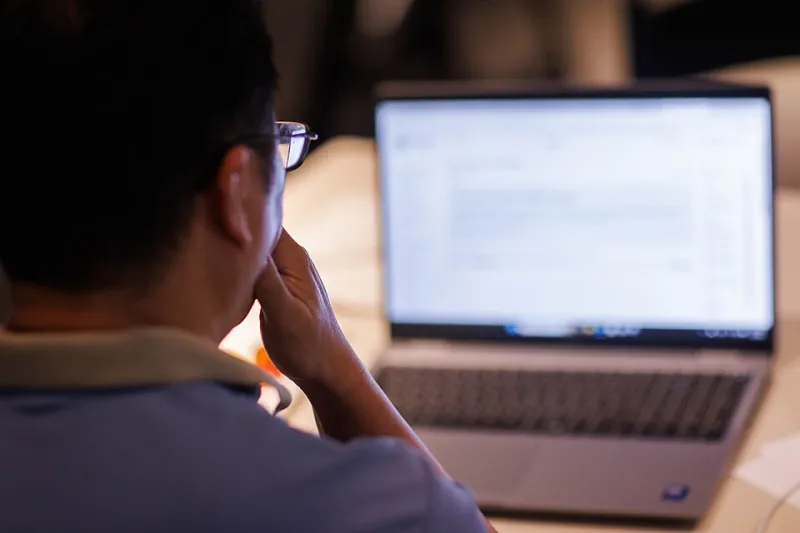
For most of the twentieth century, the ritual was the same in every American city and town: a council chamber with folding chairs, a podium, a wooden gavel, and a sign-up sheet for anyone who wished to speak. Today, that ritual increasingly unfolds through a videoconference window. Residents in rural counties, working parents, and disabled citizens who once could never attend a Wednesday-night meeting in person now address their elected officials from kitchen tables and parked cars.
The shift has been a genuine expansion of access. It has also handed municipal officials something they never had at the podium: a mute button, a participant removal tool, and a waiting-room queue they control entirely. And residents are noticing. Complaints about speakers being silenced mid-sentence, removed from virtual meetings, or barred from future sessions have surfaced from coast to coast — from suburban school boards to large-city councils.
The question citizens are asking is a fair one: if the government invites me to speak, can it cut me off because officials don't like what I'm saying?
When Does a Videoconference Become a Public Forum?
First Amendment doctrine begins with a deceptively simple sorting exercise. Sidewalks and parks are traditional public forums, where the government's ability to restrict speech is at its weakest. Council meetings themselves have long been treated as limited public forums — spaces the government opens for a specific purpose, namely public input on public business. In that space, viewpoint discrimination is flatly prohibited. A council may enforce reasonable time, place, and manner rules: three minutes per speaker, no disruptions, comments tied to agenda items. It may not let supporters of a project speak while muting its critics.
Virtual meetings have complicated this framework without overturning it. Because platforms like Zoom give the host granular control — mute, remove, disable chat, lock the room — every meeting now carries a running record of who was silenced and when. That record has proven consequential. Litigation and pre-litigation demand letters in several states have leaned on platform logs and meeting recordings to show that certain speakers were muted or ejected while others were permitted to continue, a pattern that is difficult to square with neutral administration of a comment policy.
The emerging principle, drawn from existing forum doctrine rather than any new statute, is straightforward: the medium does not change the forum. A public comment period held on a videoconference platform is as much a government-opened forum as the one held in the chamber. The mute button, in other words, must obey the same Constitution the gavel does.
Where Officials Go Wrong
The most common failures fall into a few recognizable patterns.
First, inconsistent enforcement. A written policy that promises three minutes to every commenter is abandoned when the host mutes one speaker at ninety seconds while letting an ally run for six. Selective enforcement is the fingerprint of viewpoint discrimination.
Second, removal from future meetings. Banning a resident from the waiting room of the next session — or the next dozen — converts a time-and-manner rule into an exclusion from the forum itself, a step courts scrutinize heavily.
Third, the pretext problem. Officials sometimes justify silencing a speaker as "disruption" when the recording shows nothing more than pointed criticism. Disruption is a real and legitimate ground for intervention; disagreement is not. Judges can and do watch the recordings.
None of this means hosts are powerless. Genuine harassment, doxxing of officials' home addresses, racial slurs, and people who shout over others can all be addressed — provided the rules are written down, applied evenhandedly, and aimed at conduct rather than content.
A Practical Guide for the Silenced Speaker
If your microphone gets cut during a public comment period, the moment matters. Stay calm and, if you can, document everything in real time.
- Record what you can. Most states' open meetings laws treat council sessions as recordable, and many public bodies record themselves. If your feed is cut, note the timestamp.
- Request the records. Submit a public records request for the meeting recording, participant logs, and any host actions taken during the session. Platform activity logs can show exactly who was muted and when.
- Get the policy in writing. Ask for the body's public comment policy. If it exists only as an unwritten practice, that itself is a problem.
- Put your comment on the record anyway. Written comments submitted to the clerk are typically part of the public record even if your live remarks were cut short.
- Escalate deliberately. Start with a letter to the body's counsel; many disputes end there. Organizations focused on open government and press rights often track these cases and can point to relevant state law. Formal litigation is a last resort, but the threat of it has already changed host behavior in many jurisdictions.
The Access Argument Cuts Both Ways
There is a genuine tension worth acknowledging. Hosts argue — not unreasonably — that virtual meetings are vulnerable to Zoombombing, harassment campaigns, and coordinated disruption, and that firm moderation protects the very access these meetings were meant to expand. That concern is legitimate. The answer, though, is not to abandon neutrality but to institutionalize it: publish the comment rules before the meeting, have a neutral staffer rather than a council member control moderation, log every moderation action, and offer a written comment channel for anyone removed.
The promise of the virtual town hall is that more Americans can reach their government than ever before. The promise of the First Amendment is that when they get there, the government cannot decide which of them is worth hearing. Both promises can survive the mute button — but only if officials remember that a digital waiting room is still, in the eyes of the Constitution, the public's room.