Three Minutes at the Podium: Why Your School Board Is the Real Free Speech Battlefield

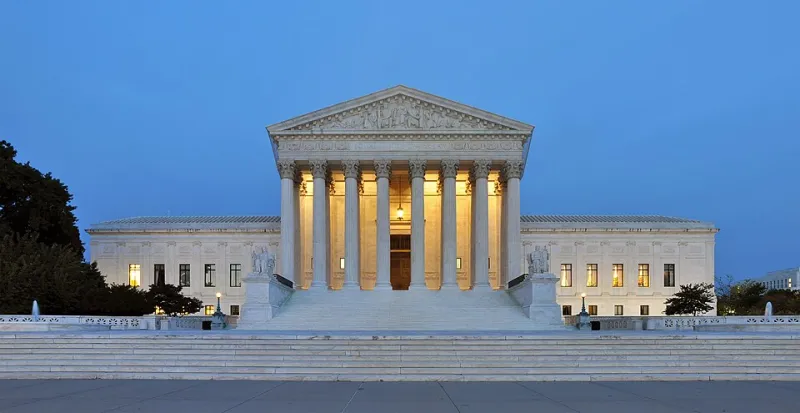
Photo: Popovitch4 (talk), Public domain, via Wikimedia Commons
The free speech fights that make headlines involve billion-dollar platforms and federal courts. The free speech fights that touch most Americans happen on a Tuesday night, in a fluorescent-lit room with folding chairs, in front of a board president checking a stopwatch.
Public comment periods are where ordinary citizens encounter government power over their expression most directly. And it is precisely because these forums feel small and informal that abuses go unchallenged. If we care about the First Amendment, we should care most about the venue where it is most commonly tested.
The Rules Are Real — In Both Directions
Start with what the law actually permits. Governments may impose reasonable time, place, and manner restrictions on speech in limited public forums like public comment periods. Time limits — commonly three to five minutes per speaker — are generally lawful. Requiring speakers to sign up in advance is generally lawful. Keeping comments relevant to agenda items is, within limits, lawful.
What government may not do is discriminate based on viewpoint. A school board cannot permit praise for its policies while cutting off critics. A city council cannot extend the microphone to supporters while muting opponents. The Supreme Court reaffirmed this principle forcefully in the 2019 case Manhattan Community Access Corp. v. Halleck context and in decisions like Minn. Voters Alliance lineage: once government opens a forum for citizens to speak, it cannot play favorites among the views expressed.
The Retaliation Problem
The more insidious threat is not the gavel during the meeting but the consequences after it. Speakers have reported being barred from future meetings, stripped of volunteer positions, or subjected to hostile official responses after criticizing local officials. Courts have recognized that retaliating against protected speech is itself a constitutional violation — but proving retaliation requires documentation, witnesses, and often years of litigation that most residents cannot afford.
This asymmetry is the design flaw. A school district has attorneys on retainer; a parent with a grievance has a smartphone and three minutes.
How to Push Back Effectively
Residents who want to protect their podium rights should treat the experience strategically rather than theatrically.
Know the governing rules. Most public bodies operate under bylaws or parliamentary procedures that are public records. Read them before the meeting. If the board violates its own rules, that is leverage.
Expect the rules to apply unevenly — and document it. If your three minutes are cut short while an ally of the board speaks for eight, note the timestamps. If possible, have someone else record. Public meetings are almost universally permitted to be recorded by attendees.
Distinguish the forum from the fight. Being cut off at the podium is not the end of the road. Written comments, public records requests, and the next election are all forums the board cannot gavel into silence. Speech advocacy groups, including national organizations with state affiliates, sometimes take on these cases precisely because they raise constitutional questions affecting many residents.
Escalate deliberately. A polite written demand citing the specific rule violated often accomplishes more than a courtroom threat. If that fails, state open meetings laws and, ultimately, Section 1983 civil rights claims remain available.
The Habit of Liberty
There is a broader argument here. Constitutional rights atrophy when they are not exercised, and they are exercised most routinely at the local level. The citizen who shows up and speaks — calmly, prepared, within the rules — is doing more to sustain the First Amendment than any commentator online.
Local officials, for their part, should recognize that a well-run public comment period is not a threat to their authority but a pressure valve that preserves it. The impulse to control the room, to cut off the critic, to punish the dissenter, always ends badly — legally, politically, and civically.
The microphone at the school board meeting is unglamorous. It is also, for most Americans, the most accessible instrument of free expression the government will ever hand them. Defend it accordingly.