When the Quad Goes Quiet: Inside the Campus Policies Deciding Who Gets to Speak
Photo: S4797, CC BY-SA 4.0, via Wikimedia Commons
Walk the grounds of nearly any public university in the United States and you will find a plaque, a plaza, or a policy document invoking the free exchange of ideas. Yet a growing body of cases suggests that the practical experience of students and faculty often departs considerably from that stated ideal. Speech codes, bias response teams, and harassment policies—frequently written in broad, subjective language—have become the terrain on which the future of American debate is being quietly negotiated.
The Architecture of Restriction
Most campus speech policies do not announce themselves as censorship. They arrive as commitments to inclusion, safety, and community standards. A policy prohibiting conduct that 'marginalizes' or 'invalidates' others, for instance, reads as compassionate to some and as a blank check for punishment to others.
The Foundation for Individual Rights and Expression (FIRE), which has rated speech policies at hundreds of American colleges, reports that a substantial share of institutions maintain at least one policy that, in the organization's assessment, restricts expression protected by the First Amendment at public schools. Private universities, though not bound by the First Amendment, increasingly market themselves as bastions of open inquiry while enforcing standards that critics say fall short of that promise.
Cases That Shaped the Debate
The tension is best understood through individuals. In one widely cited matter, a professor at a public university was placed under investigation after an email addressing a racial slur in an academic context—a discussion of linguistic history, not an endorsement—was reported by a student. The investigation was eventually dropped, but the chilling effect, faculty advocates argue, had already done its work.
Elsewhere, student governments have defunded or derecognized groups whose views a majority found offensive, and speakers across the ideological spectrum—from conservative commentators to progressive activists critical of Israel—have seen invitations withdrawn or appearances disrupted. The pattern, observers note, is not partisan but structural: whoever holds the prevailing campus consensus tends to control the boundaries of acceptable discourse.
What the Courts Have Said
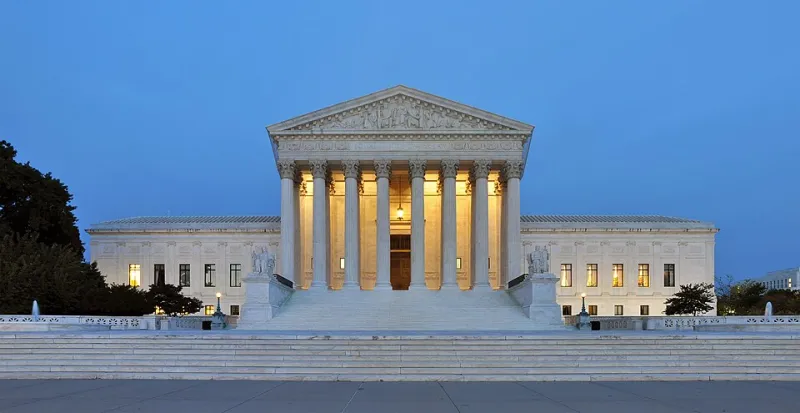
The Supreme Court has repeatedly affirmed that public universities are, in Justice Robert Jackson's words from West Virginia State Board of Education v. Barnette (1943), 'educating the young for citizenship,' a task that presupposes exposure to contested ideas. In Healy v. James (1972), the Court held that state colleges are 'not enclaves immune from the sweep of the First Amendment.'
Lower courts have followed suit. Federal judges have struck down or forced the revision of harassment policies so expansive they could sweep in mere disagreement, and the Seventh Circuit's decision in DeJohn v. Temple University (2008) rejected a sexual harassment policy that prohibited 'gender-motivated' speech that caused discomfort. The legal standard, drawn from Tinker v. Des Moines (1969), remains demanding: speech may be restricted only when it materially and substantially disrupts education or invades the rights of others. Offense, by itself, does not qualify.
The Case for Community Standards
Defenders of robust campus policies argue that the courtroom standard is not the only relevant one. Universities, they note, are communities, not public squares, and communities may reasonably set norms about respect and belonging. Students from underrepresented backgrounds describe environments where targeted harassment has gone unchecked, and they view speech codes as a corrective to genuine exclusion.
'We're not talking about silencing ideas,' one student government leader at a Midwestern public university explained. 'We're talking about whether a classmate should have to hear that they don't belong here.' That framing carries real moral weight, and dismissing it entirely would be an error.
Where the Lines Should Sit
The difficult truth is that both concerns are legitimate. Inclusion matters, and so does inquiry. The question is where the line belongs—and who draws it. A policy that prohibits true threats, targeted harassment, and substantial disruption is consistent with both the First Amendment and a functioning academic community. A policy that punishes discomfort, disagreement, or unpopular viewpoint is neither.
Several institutions have moved in the direction of clarity, adopting the 'Chicago Principles,' which commit universities to near-unlimited free expression with narrow exceptions. Others continue to maintain overlapping policies whose vagueness is itself the problem: a student who cannot predict what will trigger discipline will eventually self-censor.
Why It Matters Beyond Campus
Today's students are tomorrow's journalists, legislators, judges, and voters. The habits of mind formed in the seminar room—whether disagreement is met with argument or with a report to a bias response team—do not stay there. A generation trained to seek institutional protection from objectionable views will govern accordingly; a generation trained to answer bad speech with better speech will govern differently.
The stakes, in other words, extend well past the quad. The First Amendment was written for a country that expected its citizens to clash. Universities, of all institutions, should be the place where that expectation is honored rather than retired.