Bureaucracy as a Gatekeeper: The Hidden Cost of Marching in America
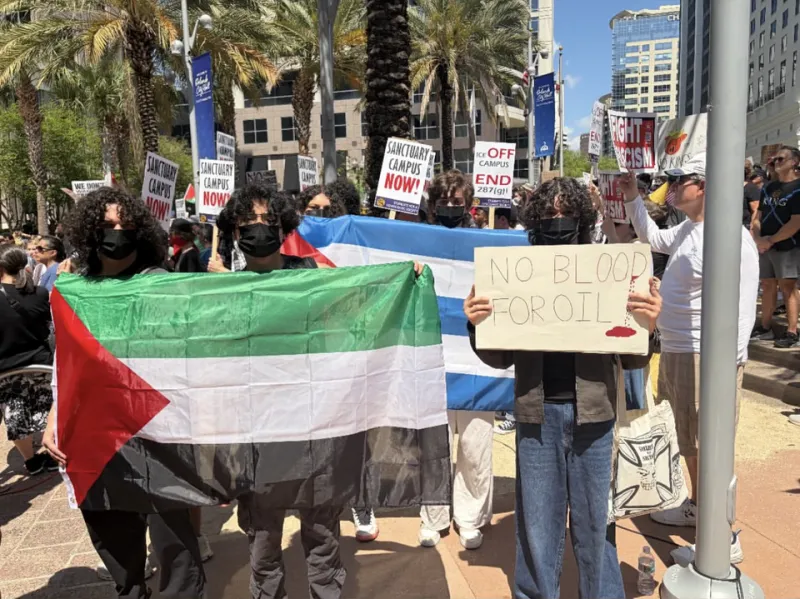
Photo: Wxllow, CC BY 4.0, via Wikimedia Commons
Picture a group of neighbors in a mid-sized American city who want to march peacefully from a public park to the steps of city hall. Their cause matters less than their mechanics: a route, a date, a crowd estimate. What they discover, within days of contacting city hall, is that the First Amendment comes with an invoice.
An application fee. A certificate of liability insurance, often in the six-figure range. A fifteen-business-day review window. An indemnification clause promising the city will be made whole if anything goes wrong. None of it, on its face, looks like censorship. All of it, together, determines whether the march happens at all.
The Paperwork Precedes the Protest
Parade and assembly permitting is one of the least examined intersections of constitutional law and municipal administration. Nearly every major city maintains some version of a special event permit, and nearly all of them impose three recurring demands: money, insurance, and time.
The money comes first. Application fees range from nominal processing charges of $25 to several hundred dollars, with additional costs for street closures, police details, and cleanup. For a grassroots group operating on donated funds, a $500 tab before a single flyer is printed is not an administrative detail. It is a filter.
Insurance is the second gate. Cities routinely require event liability coverage — commonly $1 million per occurrence — naming the municipality as an additional insured. Commercial vendors can purchase such policies routinely. Ad hoc coalitions of citizens generally cannot, at least not cheaply.
Time is the third. Many ordinances require applications 30, 60, or even 120 days in advance. But protest is often a response to events, and events do not schedule themselves around municipal calendars. A rally organized in response to a court ruling or a sudden policy announcement may be legally stale before the paperwork clears.
What the Courts Have Actually Said
The Supreme Court has never required that Americans obtain permission to speak in public. What it has required is that when governments impose permitting schemes, those schemes must contain procedural safeguards. The landmark guidance comes from cases like Forsyth County v. Nationalist Movement (1992), where the Court struck down a Georgia county's ordinance allowing officials to set fees based on the anticipated cost of policing a march — and, implicitly, on how controversial the march might be. Fees tied to the content of speech or the reaction it provokes, the Court held, are presumptively unconstitutional.
Lower courts have built on that foundation. Federal appellate courts have repeatedly invalidated ordinances that gave officials unreviewable discretion, that contained no cap on fees, and — critically — that lacked a mechanism for expedited review when an event is imminent. The doctrine that has emerged is sometimes called the "waiver and prompt judicial review" requirement: if a city denies or delays a permit, the applicant must have a fast track to a judge.
Yet plenty survives. Courts have generally upheld reasonable time, place, and manner rules: advance notice requirements for large marches, fees limited to actual administrative costs, and insurance mandates tied to genuine logistical burdens. The line is a blurry one, and it is drawn case by case, ordinance by ordinance.
Our Hypothetical March, Reviewed
Return to the neighbors planning their walk to city hall. Suppose their city charges a $75 application fee, requires 30 days' notice, and demands $1 million in liability coverage. Is that scheme constitutional?
The fee is probably defensible if it is capped, applies equally to all applicants, and covers only processing. The insurance requirement is more contested; some courts have upheld it for large street closures while striking it down for smaller gatherings in parks. The 30-day notice is where the scheme gets fragile. If the ordinance contains no expedited process — no way to ask a judge to rule quickly when a response to current events cannot wait a month — a federal court may find it unconstitutionally burdensome, particularly for spontaneous or reactive assembly.
The neighbors, in other words, may have a winning legal argument and still lose the practical one. Litigation takes months. The march was scheduled for Saturday.
The Quiet Chilling Effect
Here is the part that rarely makes headlines: the constitutional violations that never get litigated. For every permit scheme struck down in federal court, dozens more operate unchallenged, not because they are lawful but because the people they burden lack the resources to sue. A retiree organizing a vigil does not retain First Amendment counsel. She cancels the vigil.
That is the quiet genius — or quiet failure — of the permitting system. It rarely produces an outright denial that would give a plaintiff a clean legal claim. Instead it produces delay, cost, and friction, all of which are far harder to challenge and far more effective at thinning the crowd.
What Reform Would Look Like
Advocates across the political spectrum — civil liberties groups, labor organizers, faith coalitions — have converged on a short list of fixes: statutory caps on fees for First Amendment events, waivers or city-provided insurance for small assemblies, notice periods scaled to event size rather than fixed at 30 or 60 days, and mandatory expedited review when denial would render the event moot.
Some cities have already moved. A handful now waive fees for events that are primarily expressive, and a few have created streamlined permits for gatherings under a set headcount. These are modest reforms, but they acknowledge something the paperwork obscures: the default in a constitutional republic is not permission. It is assembly, with the government obliged to accommodate it, not the other way around.
The $65 application fee will not make the evening news. But multiply it across every city in the country, every weekend of the year, and every group of citizens who looked at the form and decided the cause wasn't worth the hassle — and you begin to see the shape of a First Amendment that exists mostly on paper.