The Mall Is Not the Commons: Where Your Right to Assemble Quietly Ends
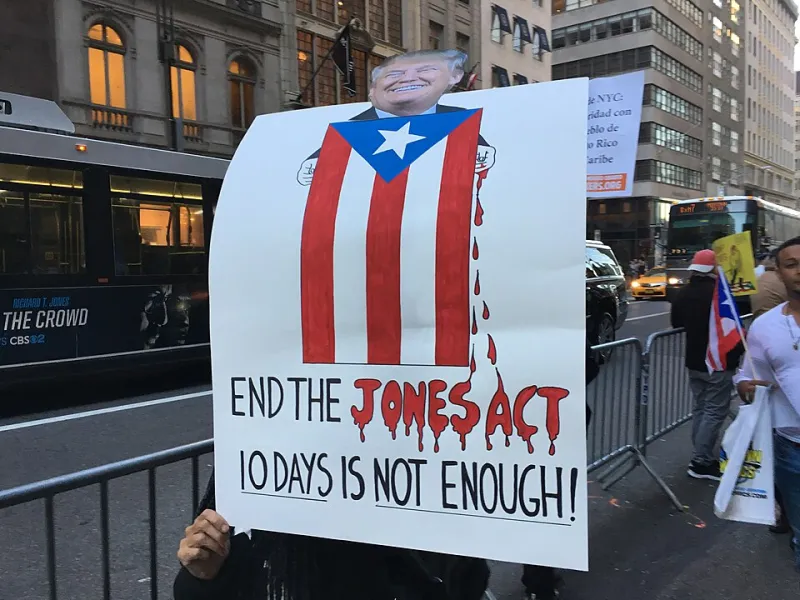
Photo: Ashoka Jegroo, CC BY-SA 4.0, via Wikimedia Commons
The Assumption Almost Everyone Gets Wrong
Picture the scene: a group of activists gathers near the entrance of a suburban shopping center, clipboards in hand, hoping to collect signatures. Within minutes, a private security officer asks them to leave. The activists protest — this is a public place, they say. It isn't, at least not in the way the First Amendment understands that word.
For most of the country, the answer to the question "can I protest in a shopping mall?" is simply no. The Constitution constrains government action, not the decisions of private landowners, even when that landowner invites the whole town onto the premises. But buried in the case law is a genuinely surprising exception, one that most Americans have never heard of and that continues to shape protest strategy in a handful of states.
Pruneyard and the California Exception
The story begins in 1979 with Pruneyard Shopping Center v. Robins, a Supreme Court case out of Campbell, California. High school students had been distributing petitions and literature in a shopping center, were told to stop, and sued. The Court ruled against the students on federal constitutional grounds — the First Amendment, it held, does not require private malls to host speech. But the case turned on something else: the California Supreme Court had read its own state constitution to provide greater protection, and the U.S. Supreme Court said that was permitted.
California remains the emblematic example, but it is not alone. New Jersey's Supreme Court reached a similar conclusion in State v. Schmid and later in the Coalition Against War in the Middle East litigation, holding that large regional malls function as the modern town square and must accommodate reasonable expressive activity. Colorado, Massachusetts, and a few others occupy intermediate positions, typically protecting signature gathering or specific modes of expression while stopping short of a general right to demonstrate.
A Patchwork With Real Consequences
The practical result is a map that looks less like a coherent doctrine and more like a quilt. A union organizer leafletting outside a store in a California lifestyle center is acting within constitutional protection under state law. The same organizer in Texas, Florida, or most of the Midwest is trespassing. Corporate campuses, privately owned plazas, and the quasi-public spaces of mixed-use developments all fall under this shifting regime.
For advocates, the takeaway is procedural as much as philosophical. Even in protective states, courts usually permit the property owner to impose reasonable time, place, and manner restrictions — designated zones, limits on group size, advance notice. The right, where it exists, is a right to be heard, not a right to commandeer the premises.
Why This Matters Beyond the Mall
The stakes have grown as the public square itself has privatized. Company towns may be gone, but company sidewalks, company plazas, and company-adjacent public transit hubs are everywhere. When a state legislature considers a bill to extend expressive rights onto private property open to the public — as several have over the past decade — it is wrestling with the same question Pruneyard posed: does the marketplace of ideas survive when the marketplace is literally owned?
Skeptics raise fair objections. Property owners argue that compelled access amounts to a speech right for one party at the expense of another, and the Supreme Court has since narrowed compelled-access reasoning in cases like DOJ v. Alliance for Hoosier Anti-Racist Militants descendants and, more sharply, in the NIFLA and 303 Creative line of rulings. The tension is unresolved, and both camps can claim the First Amendment as their ally.
Know the Ground Before You Go
For readers planning an event, three rules of thumb. First, identify the actual owner — many "public" plazas are privately owned and operated. Second, check whether your state's constitution has been read to protect expressive activity on such property; a local civil rights or ACLU affiliate can usually tell you quickly. Third, regardless of the state, treat the property owner's rules as binding until a court says otherwise.
The First Amendment's promise is real, but its reach is drawn on private lines most Americans never see. Knowing where the lines fall is the first step in deciding where — and how — to raise your voice.