The Volunteer With the Delete Key: How Neighborhood Apps Became America's Unregulated Public Square
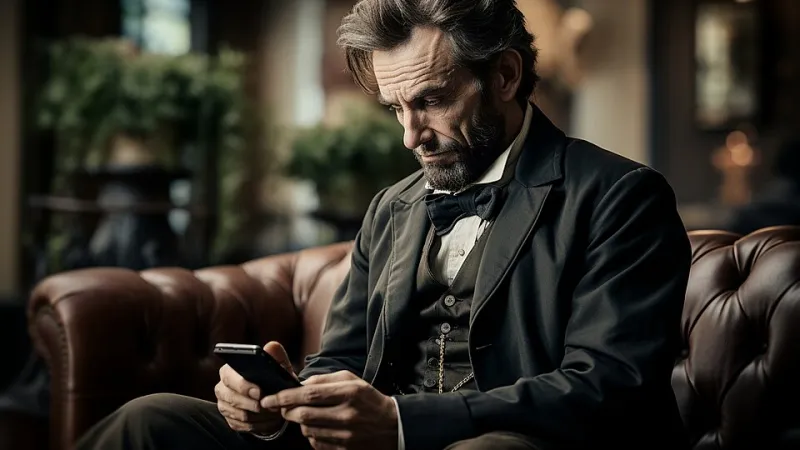
Photo: Dennis Sylvester Hurd, Public domain, via Wikimedia Commons
Before every election cycle, the same scene plays out in thousands of communities across the country. A resident posts a notice about a school board candidate forum. A neighbor shares a petition against a zoning change. Someone flags a rally at the county courthouse. And within minutes, in a moderation queue no one can see, a volunteer decides whether any of it survives.
These moderators are not government officials. They hold no office, took no oath, and face no election. Yet in an era when civic life has migrated from the church basement and the grange hall to Nextdoor feeds, Facebook groups, and Discord servers, they exercise something that looks a great deal like editorial authority over local political discourse — with no First Amendment obligations attached.
The Platform Beneath the Platform
Most people understand that the big platforms themselves are private companies. The Supreme Court has never treated Twitter or Facebook as state actors, and Manhattan Community Access Corp. v. Halleck (2019) confirmed that private entities who operate communication channels are generally not bound by constitutional speech guarantees.
What receives far less attention is the second layer: the volunteer moderator. Platform rules on Nextdoor, Discord, and Facebook Groups are enforced overwhelmingly by unpaid local users — the retired teacher who watches the neighborhood board, the gamer who runs the 4,000-member server for a mid-sized suburb. These individuals interpret vague community standards in real time, and their decisions are frequently final. Appeals exist on paper; in practice, a removed post rarely returns.
The result is a gatekeeping structure that is simultaneously personal and invisible. Unlike a newspaper's letters page, there is no masthead, no published criteria, no byline for a deletion. A candidate's announcement simply vanishes, and the audience never knows it existed.
When Moderation Meets a Ballot
The stakes are not hypothetical. In recent years, local news outlets and researchers have documented instances where group moderators removed campaign materials while leaving opposing materials untouched, muted threads discussing controversial development projects, or banned organizers promoting demonstrations. Whether these reflect bias, fatigue, or simple error is often impossible to determine — which is precisely the problem. The absence of transparency makes every removal look like a decision and every decision look like a grudge.
Consider the familiar cast of local disputes: a mask policy fight in a suburban Facebook group, a police oversight petition in a city Discord, a school closure debate on a neighborhood app. In each case, the forum where residents actually talk to each other is a private space. The genuine public square — the council chamber, the sidewalk, the park — still carries constitutional protection. But by the time an issue reaches those venues, the online conversation has already shaped who shows up and what they believe their neighbors think.
There is also the reverse problem: moderators who are sued or harassed for enforcing rules at all. Volunteer moderators have faced doxxing, defamation claims, and sustained personal abuse for removals they made in good faith. Any reform conversation has to account for their position, not just the position of the removed poster.
What the Law Does — and Doesn't — Reach
For readers wondering about recourse, the honest answer is: very little, in most cases. A private group admin who deletes your post has not violated the First Amendment, because no state action occurred. Defamation law only applies if the moderator publishes a false statement of fact about you, not if they silence you. Some platform-level terms of service offer appeal mechanisms, but these are contractual courtesies, not rights.
There are narrow exceptions worth knowing. If a moderator acts under meaningful coercion or control of a government body — say, an official city-run group where the city directs content decisions — courts have sometimes found state action, particularly after the Supreme Court's recent decisions on officials blocking constituents on personal social media accounts used for government business. A HOA-run forum with enforcement powers under governing documents may also present contractual questions. But the ordinary neighborhood group, run by an ordinary neighbor, sits firmly outside constitutional reach.
Practical Guidance for Users
If your post disappears from a community group, a few steps improve your position:
- Screenshot everything first. Document the post, the timestamp, and the removal before engaging. This matters for platform appeals and for any pattern you may want to demonstrate later.
- Read the group's published rules. Many removals are defensible under rules you agreed to when joining. Knowing the rules also tells you whether the removal was an outlier or a pattern.
- Use the platform's appeal process, not just the moderator's inbox. Platform-level review creates a record outside the local dispute.
- Diversify your channels. A candidate forum announced only in one moderated group is a fragile announcement. Physical notice boards, email lists, and public libraries remain protected and reliable.
- Take the conversation to a truly public venue. A comment at the public comment period carries legal protection no Discord channel can match.
For Those Who Moderate
Volunteers who run these spaces would do well to adopt habits borrowed from institutions with actual accountability:
- Publish written rules, and remove only under them.
- Log removals with a stated reason, even briefly.
- Recruit a second moderator for contested calls, especially during election season.
- Distinguish clearly between personal accounts and moderation actions — never use the delete key to win an argument you're also a party to.
- Step aside from moderating content about races or campaigns in which you have a stake.
None of this is legally required. All of it builds the legitimacy that keeps a community forum worth having.
The Question We Should Be Asking
It is tempting to frame this as a story about bad moderators. It is more accurately a story about structure: we have routed a significant share of local civic discourse through private channels, staffed by volunteers, with no transparency requirements and no constitutional floor. That architecture would have alarmed the framers, who assumed that public debate would happen in public.
The solution is not to constitutionalize a suburban Facebook group. It is to remember that the digital town square is a convenience, not a substitute — and that the healthiest safeguard for community speech remains the one the First Amendment was written to protect: showing up, in person, where the law still follows you in.