From Sanctuary to Courtroom: The Assembly Cases COVID Left Behind
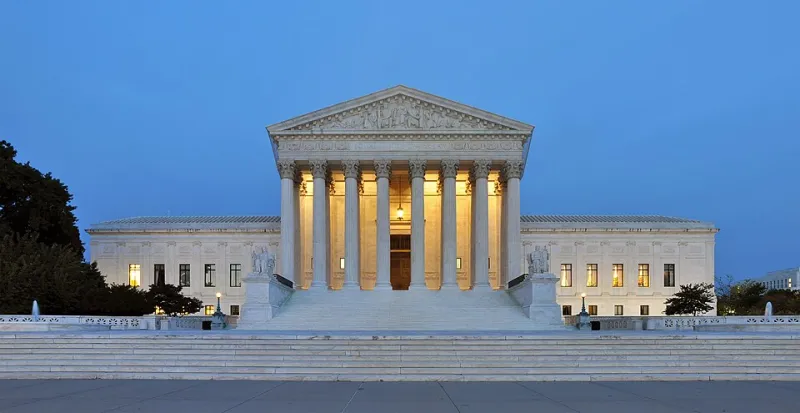
Photo: Connor Cunningham, CC BY-SA 4.0, via Wikimedia Commons
When governments swept into action in the spring of 2020, few constitutional provisions drew more sudden scrutiny than the First Amendment's closing clause: the right of the people peaceably to assemble, and to petition the government for a redress of grievances. Within weeks, that clause was being weighed against capacity limits in church sanctuaries, bans on drive-in worship, and orders dispersing crowds in city parks. Four years later, the docket those weeks produced is still moving — and its outcomes will define how much emergency authority officials retain the next time crisis strikes.
The Religious Liberty Wing of the Docket
No cases moved faster than those brought by congregations. In Roman Catholic Diocese of Brooklyn v. Cuomo (2020), the Supreme Court signaled a shift: New York's fixed caps on houses of worship, applied while comparable retail businesses operated more freely, were deemed far too restrictive to survive. Tandon v. Newsom followed with what became known as the "most-favored-nation" principle — if the state treated comparable secular activities more leniently, the religious restriction was presumptively unconstitutional.
These rulings mattered beyond the sanctuary. They established that emergency powers are not a constitutional blank check, and that courts will compare how a government treats gathering places when deciding whether the Constitution has been suspended. A synagogue in New Jersey, a megachurch in California, and a small Baptist congregation in Nevada all found themselves, for a season, at the center of American constitutional law.
Protesters Enter the Fray
Religious plaintiffs did not carry the assembly docket alone. Demonstrators — from racial justice marchers in Portland and Philadelphia to anti-lockdown protesters in Michigan and Texas — filed their own challenges when gatherings were curtailed or dispersed. Some suits targeted curfews enforced unevenly; others challenged permit schemes that had quietly hardened into near-blanket refusals.
The pattern is instructive. Courts have generally refused to accept the argument that a public health emergency justifies treating assemblies of one political character differently from assemblies of another. Where officials imposed dispersal orders on peaceful marches while allowing other crowds to form, judges on both the district and appellate levels have demanded a compelling justification. The principle cuts across ideology: the right to assemble belongs to the causes you dislike as much as the ones you support.
What the Cases Actually Established
For readers tracking the legal terrain, three takeaways have emerged from the post-pandemic wave:
- Neutral, narrowly tailored limits can survive. Across-the-board capacity rules, applied evenhandedly, have generally withstood review — especially early in the emergency.
- Inconsistency is fatal. Once a government permits comparable secular gatherings while restricting worship or protest, the restriction almost always fails.
- Emergencies end, precedents remain. Judges repeatedly stressed that they were evaluating rules as they existed at a moment in time — but those evaluations now form the baseline for the next crisis.
The Plaintiffs Who Kept Filing
Behind the citations are people with names and neighborhoods. A choir director who rehearsed her singers outdoors rather than surrender their season. A pastor who held services in a field until the injunction arrived. A college student arrested at a demonstration she believed was lawful. Some won; some lost; many settled. What unites them is a shared insistence that the government's burden during an emergency is still a burden — one that must be justified, not assumed.
Their cases are a reminder that the assembly clause, often treated as the First Amendment's afterthought, is the mechanism by which every other right gets exercised. Speech needs a street. Petition needs a crowd. And when the street closes, someone has to go to court to reopen it.
Watching the Next Emergency
Public health officials, for their part, have absorbed the lesson. Many state and local emergency frameworks have been amended to include sunset clauses, legislative oversight, and explicit findings for restrictions touching constitutional activity. That is not a retreat from public safety; it is the ordinary machinery of a constitutional republic adjusting after a stress test.
The assembly cases born of the pandemic are still being cited — in challenges to protest ordinances, in zoning disputes over houses of worship, in litigation over event permits. They stand for a quiet but durable proposition: even in the worst of times, the government must explain itself. That, in the end, is what the plaintiffs of 2020 and 2021 purchased for the rest of us, one complaint at a time.