The Certification Line: When Public Work Comes With a Political Disclaimer
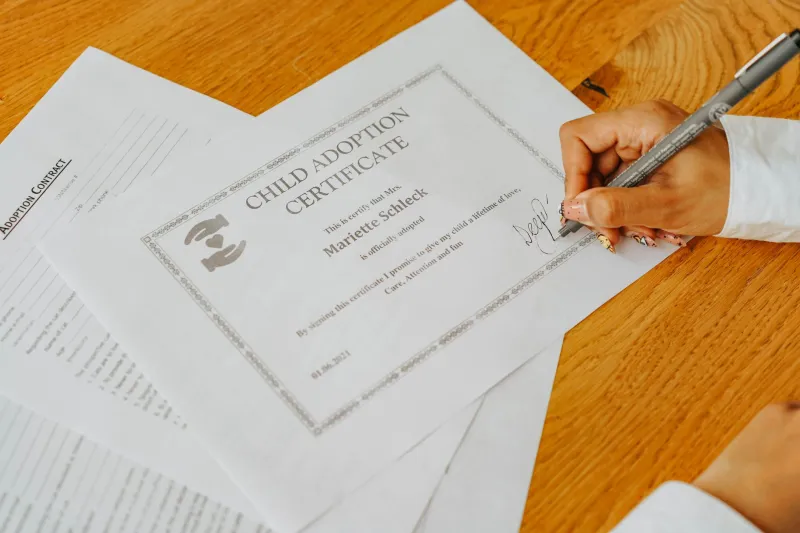
A small design firm bids on a municipal contract. The scope of work is ordinary: a website redesign, a few print mailers, a monthly retainer. Then comes the certification form. To be eligible, the firm must attest that it is not participating in a boycott of a listed industry or country. The owner has never organized a boycott, but she has posted about one. She does not know whether the clause reaches her personal speech, her company's vendor choices, or only formal commercial conduct. She signs, or she loses the bid.
That scene is no longer hypothetical. As of November 2026, dozens of states maintain anti-boycott laws that attach to public contracts, grants, and sometimes permits or vendor agreements. The statutes began as a response to the Arab League's secondary boycott of Israel and expanded in various states to cover boycotts of Israel, fossil-fuel companies, firearm businesses, and other disfavored targets. The details vary widely, but the basic mechanism is similar: the government asks a contractor to certify political conduct before it will do business.
How the clauses work in practice
Most anti-boycott provisions are not framed as loyalty oaths. They are procurement regulations. A statute may require that a contractor with a certain number of employees and a contract above a dollar threshold certify that it is not engaged in a boycott of a protected class of businesses or a foreign country. The certification often appears in a bid packet, a grant agreement, or an onboarding portal. It may apply to the contractor, its affiliates, and sometimes its subcontractors.
The language can be deceptively narrow. A form might ask whether the entity is "currently engaged in a boycott" of a listed nation. It may not define "boycott," "engaged," or "currently." It may not explain whether a consumer choice, an investment decision, a public statement, or a formal corporate policy counts. Procurement officers are not usually First Amendment lawyers, and vendors are not usually given a hearing before an application is marked nonresponsive.
For a large corporation, the clause may be a compliance line item. For a freelancer, a nonprofit, or a small business, it can function as a political litmus test buried in paperwork. The practical question is not whether the state can regulate commercial discrimination. It is whether the state can condition a routine public benefit on a contractor's disavowal of protected expressive association.
The First Amendment question
The Supreme Court has long treated boycotts as a form of expressive association when they are used to communicate a political message. In NAACP v. Claiborne Hardware Co., a 1982 decision arising from a Mississippi boycott, the Court protected collective refusals to deal that were intended to vindicate civil rights. But not every refusal to deal is expressive, and not every boycott is immune from regulation. Courts have had to sort commercial conduct from political advocacy, and government-contract conditions from ordinary marketplace choices.
The doctrine of unconstitutional conditions supplies the central tension. Government may spend its own money and choose its own contractors, but it generally cannot deny a benefit on a basis that penalizes the exercise of constitutional rights. The state may not require a person to surrender speech rights as the price of a public job, a grant, or a license unless the condition is narrowly drawn and serves a legitimate purpose unrelated to suppressing a viewpoint.
Lower courts have split over how that doctrine applies to anti-boycott certifications. In 2018, a federal district court in Kansas enjoined a state anti-boycott certification requirement in Koontz v. Watson, finding that a public-school teacher's refusal to sign likely implicated protected speech. In 2019, a Texas school district entered a consent decree in Bahia Amawi v. Pflugerville Independent School District after a speech pathologist challenged a similar clause. In Arkansas Times LP v. Waldrip, the U.S. Court of Appeals for the Eighth Circuit, sitting en banc in 2022, rejected a challenge to Arkansas's anti-boycott law on the record before it, reasoning that the certification regulated commercial conduct rather than expressive activity.
Those decisions do not add up to a national rule. The Supreme Court has not resolved the question, and state statutes differ in text, scope, and enforcement. A clause that reaches only formal commercial boycotts may fare differently from one that reaches any refusal to deal with a class of businesses, including personal investment decisions or public advocacy. A certification limited to the contract term may fare differently from a lasting eligibility bar.
The practical trap for small entities
The risk is not only litigation. It is the quiet cost of compliance. A nonprofit applying for a state grant may discover the clause after it has already spent staff time on the application. A freelance interpreter may find it in a vendor portal with no obvious way to object. A small manufacturer may be asked to certify conduct on behalf of affiliates it does not control. A speaker invited to a public university event may be asked to sign a form that has nothing to do with the speech she was hired to give.
Vendors should read the entire solicitation, not just the scope of work. The relevant questions are concrete: What exactly is prohibited? Which jurisdiction's law applies? Is the requirement a certification, a covenant, or a continuing obligation? Does it apply to the entity, its owners, its employees, or its affiliates? What counts as a boycott? Is there a threshold for contract value or employee count? Is there an appeal process? Does the clause survive termination?
There are lawful ways to push back. A vendor can request clarification in writing. It can propose alternative language that limits the certification to conduct the state may legitimately regulate. It can document an objection while preserving the bid. Nonprofits can ask whether a grant condition is mandatory or negotiable. Freelancers can ask whether the clause applies to individual contractors at all. In some cases, the right answer is to decline the work and preserve a record for a legal challenge. In others, the cost of litigation will outweigh the value of the contract, which is precisely why the clauses can operate as a quiet filter on who enters public life.
The line that remains unsettled
Supporters of anti-boycott laws argue that the state should not subsidize entities that discriminate against particular industries or nations. Critics contend that the certifications turn the public purse into an instrument of political conformity and force small vendors to choose between their livelihoods and their associations. Both positions will continue to be tested in court.
For now, the safest conclusion is also the most modest: a government contract is not a license to demand political agreement, but the law is not yet settled enough to promise that every certification line will fall. Vendors who encounter one should treat it as a legal document, not a formality. The signature may be small, but the constitutional question behind it is not.