The Card Catalog Under Siege: How America's Libraries Became the Newest Speech Front
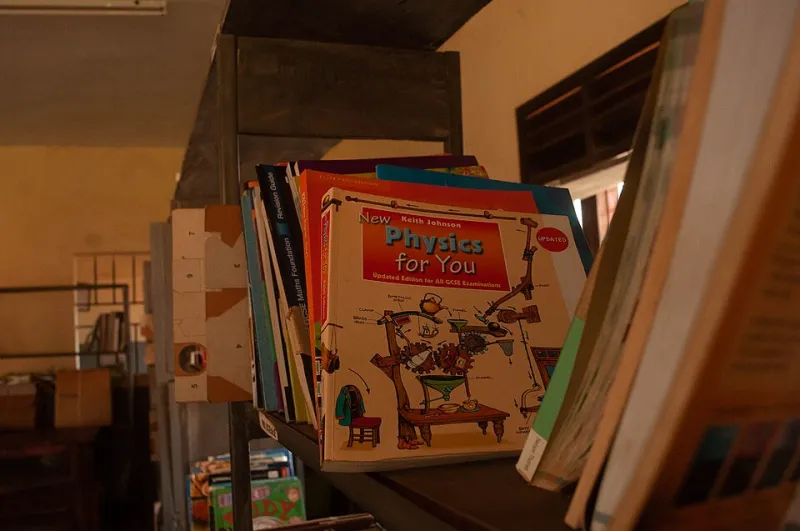
Photo: AKibombo, CC BY-SA 4.0, via Wikimedia Commons
There was a time when the most contentious item in a public library was the overdue fine. No longer. Over the past several years, America's libraries — institutions designed, by their very charter, to serve everyone — have become the staging ground for one of the country's sharpest free speech conflicts. The book on the shelf, it turns out, is a political document. So is the decision to remove it.
The Numbers Behind the Uproar
The American Library Association's Office for Intellectual Freedom has documented a dramatic escalation in challenges to books, with recent years producing record numbers of formal requests to remove titles from school and public collections. What distinguishes the current wave from earlier eras of censorship is its organization: coordinated campaigns, model legislation circulated among statehouses, and challenges that arrive not from a single parent but from advocacy groups with statewide reach.
The targets cluster predictably — titles dealing with race, gender identity, and LGBTQ themes top most lists. But the mechanism matters more than any single title. When removal procedures become politicized, the precedent applies to everything, including books the current challengers may one day want protected.
The People in the Middle
Consider the position of the average public librarian. Trained in collection development and bound by professional ethics to serve the entire community, librarians now face a triple bind. Remove a challenged book, and they may face accusations of discrimination or, in some states, even criminal exposure under vague obscenity statutes. Refuse, and they may be targeted for termination, harassment, or defunding. Meanwhile, library boards — often volunteer positions held by neighbors — have become elected battlegrounds, with slates of candidates running explicitly on shelf-clearing platforms.
Patrons, too, are affected in ways that rarely make headlines. When a library loses funding over a book dispute, it's not the trustees who lose hours or services. It's the rural resident who relies on the library's internet terminal to file taxes, the job seeker using the career database, the child at storytime. Defunding a library punishes the whole community for a dispute about a handful of titles.
The Emerging Legal Landscape
The courts have long recognized that the right to receive ideas is a component of the First Amendment. In Board of Education v. Pico (1982), a plurality of the Supreme Court held that school officials cannot remove books from library shelves simply because they disapprove of the ideas within them — a principle that remains the touchstone, even as its application to public libraries and new state laws is being tested.
The current wave of legislation is stress-testing that precedent. Some states have passed laws making it easier to remove materials or exposing librarians to prosecution for distributing materials deemed "harmful to minors." Others have moved the opposite direction, enacting statutes that protect librarians and libraries from liability for following their own collection policies. The result is a genuine federal patchwork: the same book, the same librarian, the same act — legal protection in one state, potential prosecution in another.
Several cases now winding through the federal courts will help settle the question of when a removal is a legitimate curatorial judgment and when it constitutes viewpoint discrimination. The distinction matters. Choosing not to purchase a book is different from stripping one from the shelf because of the ideas it contains — but bad actors on both sides of this debate have shown a talent for blurring the line.
Why Neutrality Is Not an Option
A common refrain holds that libraries should simply stay "neutral" and avoid controversy. This sounds reasonable and collapses on inspection. A library that removes every challenged title is not neutral; it has adopted the challenger's view of what belongs in public space. A library that refuses all removals has done the same in mirror image. Neutrality, in practice, is a decision about whose claims prevail when they conflict — and pretending otherwise simply outsources that judgment to whoever shouts loudest at the next board meeting.
The honest position, and the one consistent with First Amendment tradition, is procedural: transparent reconsideration policies, published criteria, decisions made in public meetings by accountable boards, and review rights for patrons on every side. Institutions that follow fair process rarely produce the flashpoint controversies that make the news.
What Readers Can Do
For patrons who care about the right to read, the levers are local and unglamorous. Attend library board meetings. Vote in the elections that determine board composition. Submit written comments during reconsideration reviews. Support library foundations and Friends groups, which provide funding streams less vulnerable to political retaliation. And read the challenged books — the most straightforward rebuttal to a censorship campaign remains a library card in active use.
The shelf is not a neutral space, and it never was. The question is not whether values get expressed through library collections; it is which values, decided by whom, and under what rules. Americans who believe that access to ideas should be broad rather than narrow have an obligation to show up for the institutions that make it possible — before the quiet war over the bookshelves is settled without them.